
The Next Frontier of Australia’s Energy Transition: Strata Living
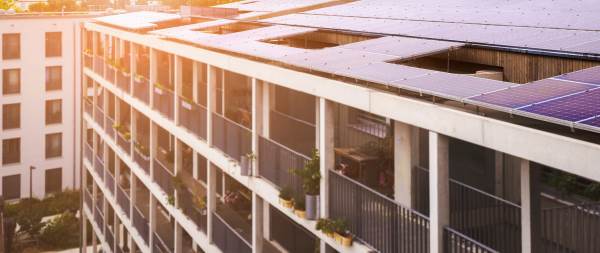
The future of energy transition in strata residential buildings will soon be a practical reality, not just a policy debate. By 2026, federal strategies, state rebates, increased battery adoption, and building rating systems will make shared living spaces more affordable, cleaner, and resilient.
However, success requires effective governance from Owners Corporations and clear technical approaches for shared systems.
The updated 2025 Trajectory for Low Energy Buildings gives clear policy direction that governments intend to accelerate energy efficiency and electrification across all building types. The Trajectory signals stronger expectations for fabric performance, electrification of services, and coordinated state-federal action, creating a policy tailwind for strata upgrades and retrofit programs.
Victoria’s “Solar for Apartments” initiative and similar state initiatives has reduced the cost barrier to rooftop shared solar for strata by offering rebates per apartment and per-building caps – a model likely to be replicated by other states. These subsidies make pooled solar systems financially viable for apartment blocks that previously found them too complex or expensive. When paired with smart metering, rooftop solar can reduce levies and electricity bills for residents.
Perhaps the biggest near-term accelerator is the rapid expansion of battery storage supported by federal incentives. Australia’s 2025 household battery subsidy rollout has triggered a surge in battery install rates, increasing storage capacity and making on-site consumption of solar far more attractive. For strata buildings, this creates an opening: for shared batteries (or building-level systems) that allow apartment blocks to capture a higher share of solar generation, reduce peak demand charges on common services, and provide backup power for critical common areas during outages. As battery costs fall further through subsidy-driven scale, combining PV and storage in strata becomes a mainstream retrofit pathway.
Market and regulatory levers are arriving in parallel. Rating schemes such as NABERS for apartment buildings now provide a clear framework to measure building performance and help owners quantify returns from energy investments. These ratings focus on shared services energy use, which is the part of the building energy that strata bodies control, allowing Owners Corporations to set targets and track upgrades like LED lighting, efficient pumps, central hot water electrification, and solar plus storage.
GBCA initiatives are also shifting to promote higher performance at the unit level. Programs like “Apartments Pathway” and Green Star offer apartment-specific assessments, creating value for certified low-energy apartments and supporting financing of building upgrades. Energy ratings are increasingly considered in property valuations, encouraging Owners Corporations to invest in energy transition measures.
Technical and governance barriers remain. Ownership structures mean roofs and shared plant are common property, so installing PV or batteries requires Owners Corporation approval, navigating by-laws, and often legal advice. Many strata committees often lack the in-house expertise in managing energy projects, a gap filled by providers like Active and government programs. Clearer model by-laws, standardised procurement templates, and accessible technical guidance will be crucial in 2026 to reduce “soft” transaction costs.
Practically, the near-term playbook for strata committees is threefold:
- Assess and meter common services to identify low-cost savings and the right scale for solar, plus storage;
- Pursue available rebates and financing structures to spread upfront costs; and
- Plan for electrification of common property services and staged decarbonisation. This includes replacing gas hot water systems with heat pumps and ensuring new appliances are electric-ready.
By 2026, hybrid models like community solar banks, resident cooperatives, and third-party ownership will become more common, reducing costs and providing reliable returns. These models, combined with falling hardware costs and stronger policy signals, will make the transition practical for a majority of strata buildings. However, uptake will vary, skewed towards buildings with active committees, access to roof space, and good amenity for shared metering.
The energy transition for Australian strata buildings in 2026 will be driven by policy momentum, increased battery availability, mature rating systems, and a growing market of specialists. Despite technical and legal complexities, the economic and resilience benefits of solar, storage, and electrification are compelling. With sensible governance, access to rebates and clearer procurement pathways, strata communities are poised to lead Australia’s low-carbon built environment, turning apartment roofs and plant rooms from cost centres into community assets.
Active is here to support this transition. Contact us at sales@activeutilities.com.au to find out more.
View Comments
(0)