
Communities At Risk – Don’t hedge your bets with accelerating climate change impacts

Climate change may be intensifying more rapidly than governments, financial institutions and insurance markets anticipated*. This is heightening concerns about the readiness and resilience of our insurance capacity and the stability of the wider financial system.
Decision-making and governance lag reality
Current climate and economic models likely underestimate both the speed of global warming and its resulting financial impacts.
Progress in climate policy, land-use planning and building codes is often slow due to:
- political cycles
- regulatory complexity
- funding constraints.
A warmer climate means we’re susceptible to more frequent and more extreme weather events, which in turn puts sustained pressure on insurance claims costs and premiums. In higher-risk regions, this may lead to insurance becoming unaffordable or unavailable sooner than anticipated.
Against this backdrop, insurance markets need to revisit core assumptions about risk horizons, loss severity and capital adequacy to remain resilient in the face of a rapidly evolving risk landscape.
The risk is hiding in plain sight
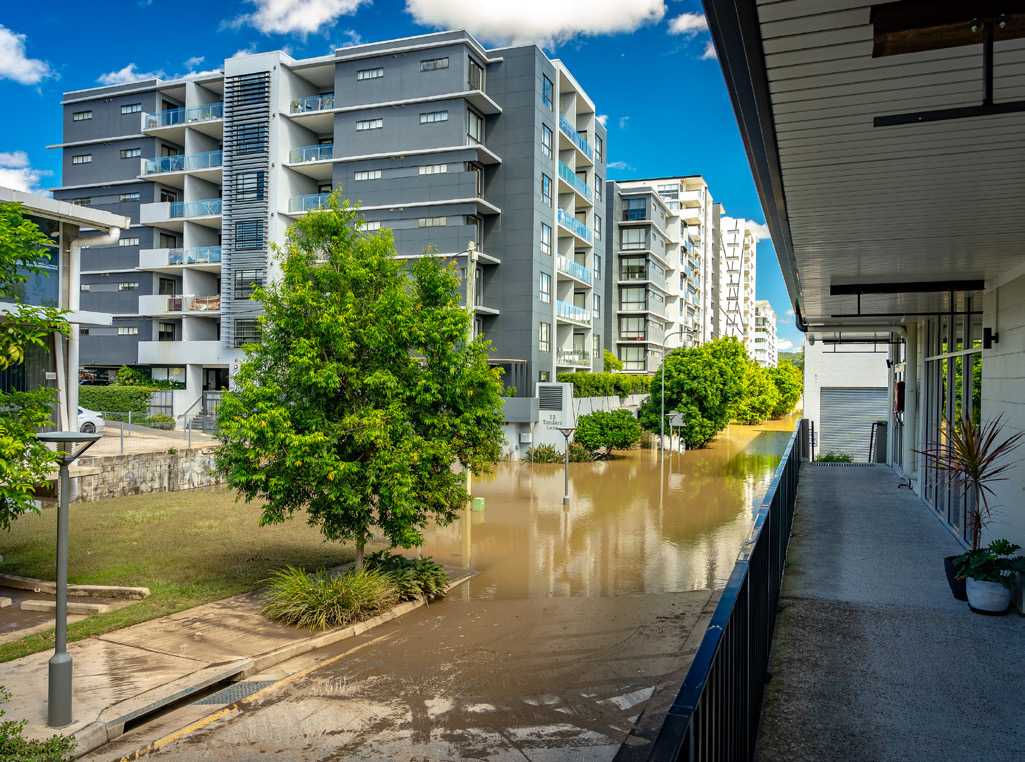
Every year, Australian communities endure devastating losses from extreme weather events such as floods, bushfires, storms and heatwaves. And we already know these events are becoming more frequent and severe.
In 2025, a series of catastrophes intensified the pressure on Australian communities, insurers and governments to accelerate support, strengthen resilience and scale up risk-mitigation measures.
- Australia recorded its fourth warmest year on record
- Rainfall patterns were uneven: below average across Tasmania, Victoria and South Australia, but above average in Queensland, coastal New South Wales, southern Western Australia and parts of the Northern Territory.
Attention is now turning to the increasing likelihood of an El Niño event. Rapid warming in the Pacific Ocean has raised the probability of a hotter, drier second half of 2026. Sea surface temperatures have risen by more than 1°C since January, the fastest rate of warming this century.
Although long-range forecasts beyond August remain uncertain, El Niño usually brings lower spring rainfall and warmer-than normal temperatures in the eastern states, particularly from June to November, and is often associated with drought, extreme heat and bushfires.
How communities are building resilience to extreme weather patterns
People living in strata are part of both their immediate strata community and the broader neighbourhood community. This makes coordinated preparedness and response especially important, as extreme weather impacts rarely stop at individual properties.
Insurance plays a critical role in supporting the long-term physical and financial viability of communities exposed to extreme weather. It’s there to protect everyone by transferring risk away from households to insurers, and even to global insurance and capital markets.
However, the social and economic costs of extreme weather events in Australia remain significant, and are rising.
In response, Australia is increasingly focusing on strengthening preparedness, adaptation and recovery capabilities. The CSIRO is working with governments, our industry and communities, drawing on expertise across engineering, design, agriculture, digital technology, marine and atmospheric science, hydrology and social and economic research, to help develop:
- more accurate weather and climate predictions
- earlier and more reliable warning systems
- faster, more cost-effective disaster recovery.
Together, these efforts aim to reduce vulnerability and improve communities’ ability to anticipate, withstand, and recover from increasingly frequent and severe weather events.
“The claim is the product”
Public concern about the availability and affordability of insurance remains high. In a healthy market, insurers are well-positioned to manage risk, including climate risk, by spreading exposure across a broad portfolio and leveraging reinsurance. Even so, reducing property exposure in highhazard areas will continue to present real challenges.
At BCB, our role is to help you understand your risk profile. When a loss occurs, we guide you through every stage of the claims process clearly explaining what to expect and ensuring your interests are properly understood and represented. Our focus is always on achieving a fair and practical outcome.
And while recent weather conditions have been relatively mild, with a summer that avoided major catastrophic events, this is no reason for complacency. Periods of lower claims activity like this encourage greater competition in the market with more insurers willing to take on risk. It presents an opportunity for strata communities to strengthen their insurance position by reviewing coverage and improving resilience. Ultimately, properties that are better prepared and better managed are far more likely to withstand future weather events.
We are also adapting to the changing market dynamics. Our business is shifting to offer greater choice, broader services and a multi-brand approach, aligned with where we believe the market is heading.
In the end, this is an ecosystem challenge. Long-term solutions will require collaboration across insurers, brokers, strata managers and communities to better protect the environments we all share.
*The Parasol Lost, Institute and Faculty of Actuaries (IFoA) and the University of Exeter
View Comments
(0)